
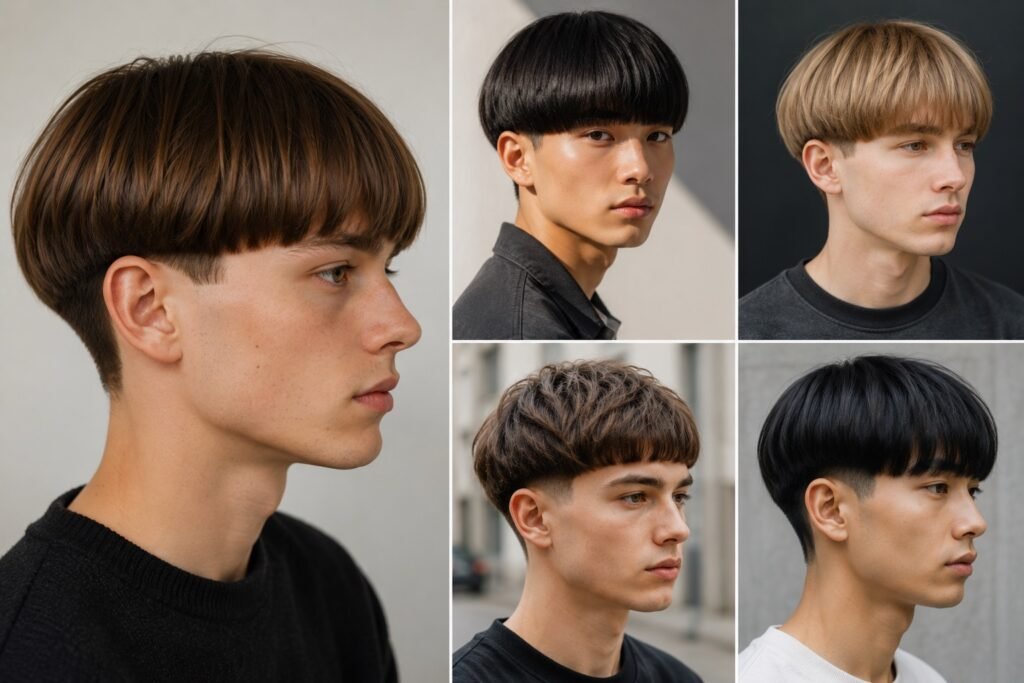
A bowl cut does not happen by accident. It is one of the most recognizable shapes in hair history, and it carries more weight than most people realize. This style wraps the head in a clean, rounded silhouette that frames the face like a halo.
The style has walked runways, made its way to the classrooms, and appeared on album covers for decades. Let’s explore if getting the bowl cut helps you decide if this bold look fits your personality and your daily routine.
Shape and Structure Behind the Style
A bowl cut features hair cut to the same length all the way around the head. The result creates a smooth, curved line that follows the natural shape of the skull.
Stylists create this look by cutting the hair horizontally. The head is often used as a guide to achieve the accurate shape according to the head shape. The fringe usually sits straight across the forehead, while the sides and back fall at an even length.
This cut relies heavily on precision. Even a small mistake in the line throws off the entire balance. The hair must lie flat and uniform, so texture and thickness play a huge role.
People with straight, fine hair often find the bowl cut easier to maintain. Those with waves or curls may need extra styling to keep the rounded shape intact.
The length can vary. Some bowl cuts stop at the jawline. Others creep toward the collarbone. The classic version keeps everything at ear level or just below. Modern stylists sometimes add subtle layers underneath to remove bulk, but the outer line stays crisp and continuous.
Hair Time Salon stylists add their twist to the style depending on your face shape and threshold for maintenance.
History and Cultural Impact of the Bowl Cut
Believe it or not, the bowl cut has a long story. What you thought was a joke is actually true. Parents in medieval Europe placed actual bowls on their children’s heads and trimmed around the rim.
The approach saved money and kept hair out of the way. Over time, the look became the symbol of innocence, simplicity, and youth.
In the 1960s, the style exploded into pop culture. British rock bands and fashion icons wore modified versions that pushed the cut into mainstream cool.
Today, the cut cycles back every few years. Fashion magazines feature it on models. K-pop stars and indie musicians revive it with fresh twists.
It never fully disappears because it offers something rare in hair fashion, which makes it instantly bold, yet surprisingly low maintenance. It makes a statement without screaming for attention.
Who Should Consider Getting a Bowl Cut
Take it from an expert stylist from Hair Time Salon: face shape matters when you think about a bowl cut. Oval and heart-shaped faces often carry the rounded line well. The even fringe balances a wider forehead, while the uniform sides soften angular jaws.
While the round faces can still wear the style, the cut needs slight adjustments. A skilled stylist might leave the top slightly longer or add subtle angles to avoid emphasizing fullness.
Hair texture also guides the decision. Straight hair falls naturally into the bowl shape. Wavy or curly hair creates volume that fights the clean line.
That does not mean curly-haired people cannot wear the look. It simply means they need a stylist who understands how to work with their natural pattern. A good cut accounts for shrinkage and spring, so the final result still reads as a true bowl shape.
The stylists at Hair Time Salon are experts in managing the curly haircut. They know curly hair cannot have the same technique as straight hair when giving a trim or cut.
Lifestyle plays a role too. This cut demands regular trims. The clean edge grows out fast, and the shape loses its impact once the line gets fuzzy.
If you prefer a style that stretches six to eight weeks between appointments, the bowl cut might frustrate you. However, if you enjoy frequent visits to the salon and love a crisp, polished look, this cut rewards your attention.
How Stylists Create and Maintain a Bowl Cut
The process starts with a hair consultation. Your stylist examines your hair density, growth patterns, and head shape to determine they go with the style. They discuss how much maintenance you want and whether you prefer a classic or modern interpretation.
Communication matters because the bowl cut leaves little room for error. During the cut, stylists work in sections. They often start at the back and move forward, checking symmetry after every few snips. Some use a comb and scissors. Others rely on clippers for a super-sharp perimeter.
The fringe receives special attention because it anchors the entire look. A crooked fringe ruins the illusion of the perfect bowl.
Styling at home requires minimal effort for most people. A quick blow-dry with a round brush smooths the shape. A dab of lightweight pomade or serum controls the flyaways and adds shine.
People with finer hair might use a volumizing spray at the roots to prevent the cut from looking too flat.
Regular trims keep the line fresh. Most stylists recommend visits every four to six weeks. Between appointments, you can touch up the fringe at home with sharp haircutting scissors, but major reshaping belongs in professional hands.
Conclusion
Bowl cut isn’t just a haircut; it’s a deliberate fashion choice. The look makes one look kept, together, and sorted.
At the stylist part, the style demands precision, rewards maintenance, and never fails to turn heads. Whether you want a nostalgic throwback or a modern fashion statement, the bowl cut delivers a look that stands apart from layered trends and faded undercuts.
Before you commit, talk with a stylist who understands your hair and your goals. The right professional shapes the cut to fit your face, your texture, and your life.
For expert guidance and a flawless finish, visit Hair Time Salon and let a skilled team bring your vision to life with care and precision.