
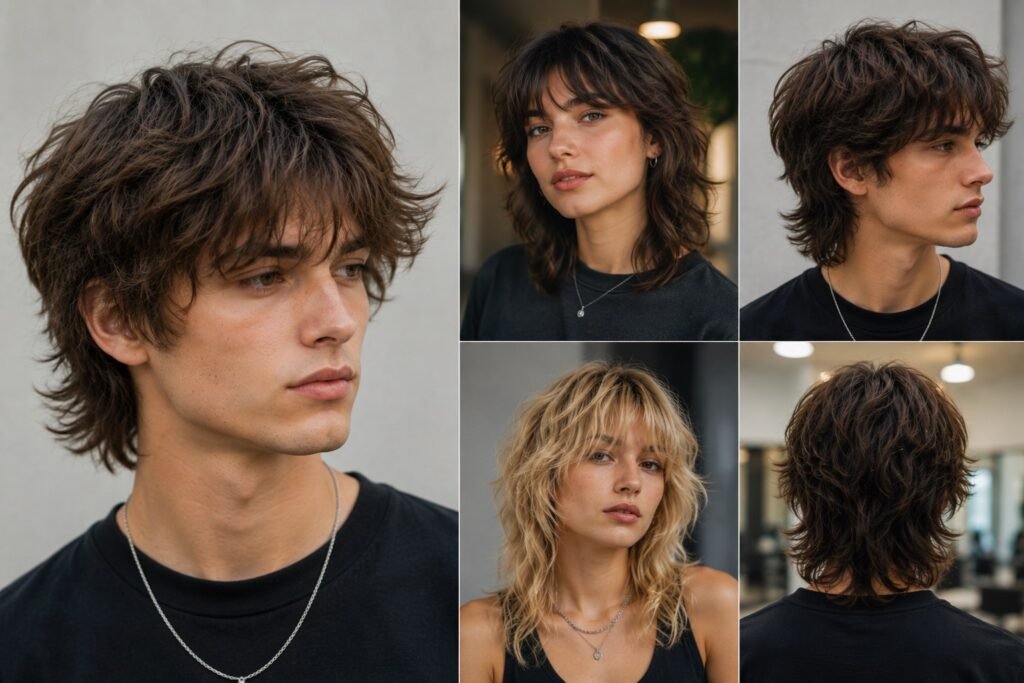
The shaggy haircut never really left, but stylists reinvented it for a new era. This fresh version blends rock-and-roll attitude with soft, wearable texture that suits almost anyone.
It carries the DNA of the 1970s original, yet it feels completely current. Understanding what makes the new shaggy haircut different helps you decide if this layered, lived-in look belongs on your head.
Core Structure of the Modern Shag
Ideally, the shaggy haircut builds on layers. But these layers serve a purpose beyond volume. Stylists at Hair Time Salon cut them to create movement and frame the face without adding bulk.
The shortest pieces usually sit around the cheekbones or eyes. From there, the length cascades downward in soft, disconnected steps. The result looks effortless, even though the cut demands real skill.
Important to note, bangs play a starring role in this style. Most modern shags feature some form of fringe, whether blunt, wispy, or curtain-parted. The bangs connect visually to the face-framing layers, creating a continuous flow around the head. This integration separates the new shag from random layered cuts that lack direction.
The ends receive special attention. Stylists at Hair Time Salon often razor or point-cut them to create a feathered, airy finish. Blunt ends would kill the vibe.
The goal is hair that moves, bends, and catches light in different ways. Even thick hair transforms under this technique because the removal of weight allows natural texture to shine.
Moreover, the length varies widely. Some people wear the new shag as a short, choppy bob that grazes the collarbone. Others push it past the shoulders with long, cascading layers.
The unifying factor is the shape. It should look like you woke up, shook your head, and walked out the door looking incredible.
How the New Shaggy Haircut Differs from the Original
The 1970s shag celebrated extremes. It paired super-short crown layers with dramatic length at the back. Think rock stars and movie icons with hair that defied gravity.
The modern version tones down that drama. It keeps the spirit but softens the silhouette for everyday wear.
Texture handling has improved dramatically over fifty years. Stylists at Hair Time Salon now use dry-cutting techniques to see exactly how each curl or wave falls before they commit to a line.
They customize the layer placement based on density and growth patterns. This precision prevents the triangular shape that plagued older shag cuts on thick or curly hair.
Most importantly, styling products also changed the game. Lightweight mousses, salt sprays, and texturizing powders enhance natural movement without stiffness. The new shag relies on these products to achieve that perfectly messy finish.
Back in the day, people used heavy gels and hairsprays that crusted and cracked. Today’s formulas keep hair touchable and soft.
Gender boundaries dissolved too. The original shag appeared mostly on men in popular culture, with women adopting modified versions.
Now, the cut transcends labels. Barbers shape shags on masculine frames. Salons craft them into feminine ones. The style celebrates the person, not the category.
Who Should Consider the New Shaggy HairCut
Face shape guides the layer placement more than the decision itself. Oval faces carry almost any shag variation. Round faces benefit from longer layers that elongate the silhouette.
Then, the square jaws soften under wispy, face-framing pieces. Meanwhile, heart-shaped faces balance beautifully with curtain bangs that draw attention to the eyes.
All in all, hair texture matters, but the new shag adapts well. Straight hair gains instant volume and interest from the layers. On the other hand, wavy hair finds its natural rhythm enhanced rather than fought. Curly hair transforms into a defined, springy shape when a curl specialist handles the cut. Even coil hair works with adjusted layer lengths that account for shrinkage.
Your daily routine influences the choice. The shag rewards people who embrace a little messiness. If you need every hair in place before you leave the house, this cut challenges that instinct.
However, if you love a style that looks better after a day of wear, the shag delivers. It actually improves with natural oils and slight disarray.
Growth patterns and cowlicks require honest discussion with your stylist. A strong swirl at the hairline might push bangs in an odd direction. A pronounced crown cowlick could create unwanted height.
A skilled professional at Hair Time Salon maps these patterns before cutting and adjusts the plan accordingly.
How to Style and Maintain the Look
Start with the right wash routine. Over-cleansing strips the natural oils that give the shag its lived-in texture. Use a gentle shampoo two or three times a week. Condition the mid-lengths and ends, but keep the roots light to preserve volume.
Blow-drying sets the foundation. Flip your head upside down and rough-dry until mostly dry. Then flip back up and use a round brush on the bangs and face-framing pieces. The goal is to lift at the roots and soft bends through the lengths. Finish with a blast of cool air to set the shape.
Product selection makes or breaks the style. Salt spray adds grit and separation to straight or wavy hair. Texturizing paste defines individual layers on shorter cuts. Lightweight oil smooths frizz on curly versions without weighing them down. Experiment to find your perfect combination.
Trims keep the shape alive. The shag grows out better than blunt cuts, but it still needs attention every eight to ten weeks.
Without regular maintenance, the layers lose their connection, and the cut starts to look accidental rather than intentional. Your stylist can also refresh the texture and remove any bulk that builds up over time.
Conclusion
The new shaggy haircut proves that great style evolves rather than disappears. It honors its rebellious roots while embracing modern technique and inclusivity.
The cut flatters diverse faces, textures, and lifestyles. It asks for some styling effort but rewards that effort with a look that feels personal and alive. Before you commit, find a stylist who understands layering and texture.
The right hands transform this cut from a trend into a signature. For a shag that fits your hair and your life, visit Hair Time Salon and let an experienced team craft layers that move with you every day.